Norwegians have loads of prejudice toward Swedes. We jokingly attribute them hedonistic and egoistic qualities and we think less of them due to their cheap labor and bacon. It is also commonly understood that they are far less intelligent than Norwegians but only a little bit less intelligent than Danes. But I have never heard the joke “The Swede that voted for the dictator” although that is probably the most factual postulate in this section.
A fresh World Values Survey reports that one in four Swedes between the age of 18 and 29 thinks that it would be quite ok to be ruled by an undemocratic leader.
It was all over the news in Sweden and Norway a few weeks ago, but the media simply reported on the facts without asking the question “why?” Is it not worrying that a country consistently ranked as one of the most democratic and transparent countries in the world, doesn’t seem to like it all that much?
Staffan I. Lindberg, the research manager for the survey writes on dn.se that the generation gap between those who experienced the Cold War and those who didn’t is reflected in the results. 21% of young people would vote for a different party if they got paid compared to only 2.5 % among older Swedes. Lindberg then speculates whether less newspaper reading and low quality history education has affected the ingratitude for democratic values. Education and Information are ongoing processes and might explain some of the matter, but I wonder whether the undemocratic values can be attributed to more contemporary events.
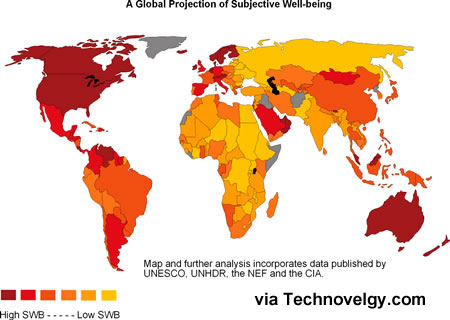
I think the answer to why such a happy, transparent, equal and democratic society doesn’t mind autocracy all that much might be that Swedes are actually unhappy.
§ Unemployment among young Swedes in 2009 was 25% and in 2010 29%, by far highest in Scandinavia and above the average in the European Union
§ Swedes are becoming increasingly aware of employment and immigration issues thanks to the nationalistic party Sverigedemokraterna (SD)
§ SD was elected in parliament with 5.7 % of the votes in September 2010. However, the most stunning results were seen in the school elections where they won more than 12% votes and in some schools as much as 60%
Young Swedes experience greater difficulties than their older countrymen and a radical party draw their attention towards great flaws and need for change. Their message is concrete and “logical”, something young people can relate to. All in all, young people observe that things are not going so good despite their admirable democratic system. Dictatorship=change and change=good. One can question the capacity of the object that sits between young Swedish ears if these equations in fact reflect real thoughts. However, one should not be so quick to judge. Unemployment has fuelled revolutionary movements in the past, the uprisings in the Arab world as well as in Spain shows just how important jobs are for stability, especially for youth.
